The analysis archive
Drawings &
AI Analysis
A structured visual archive for the original Genesis, Matrix, and Origins drawings, with contextual material on related colour variants and derivative formats.
Each drawing opens into its own dedicated page, where the work can be examined through visual structure, symbolic logic, geometric patterning, trilogy context, and AI-assisted interpretation.
How to use this archive
Choose a drawing. Open its structure.
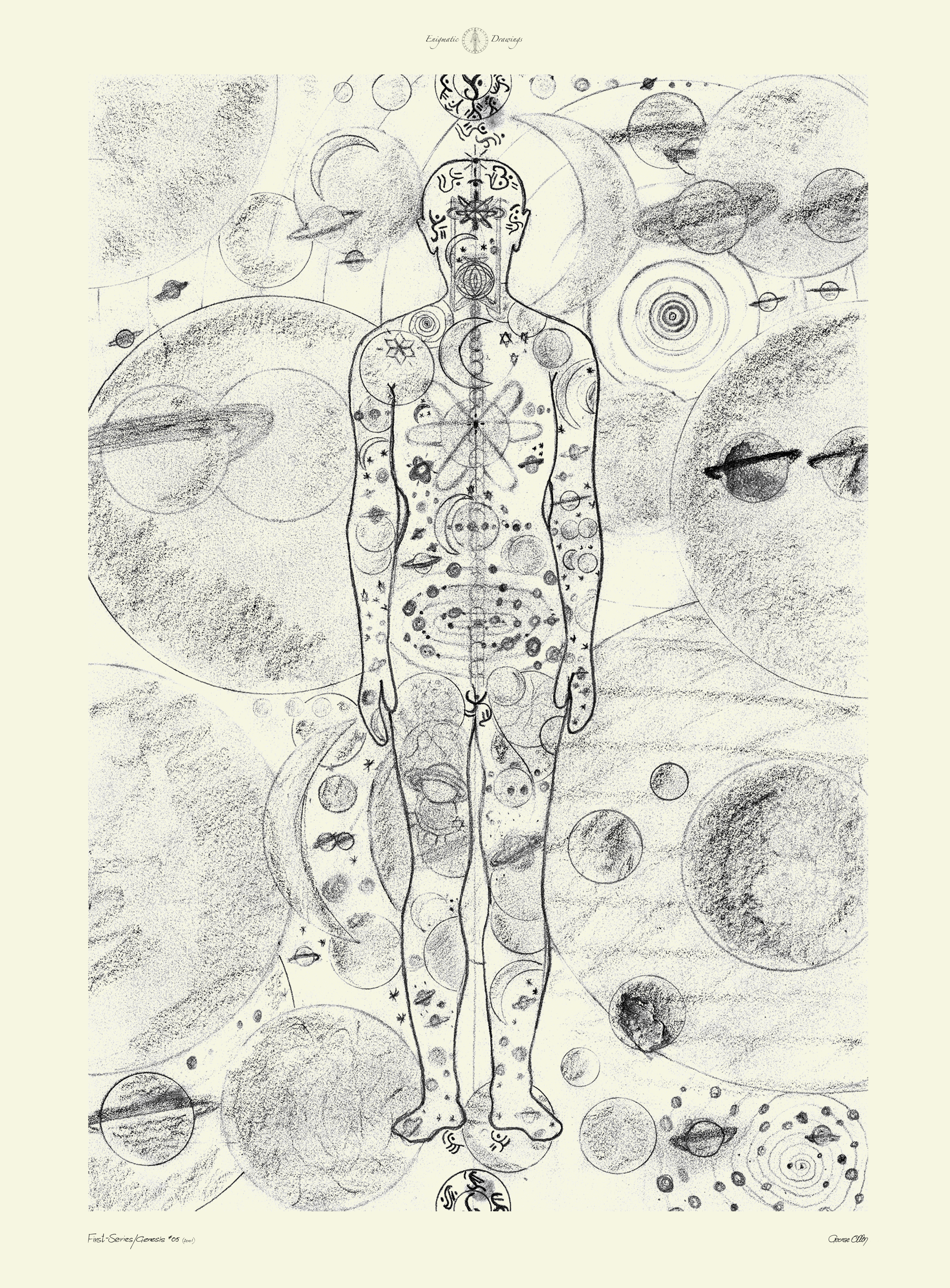
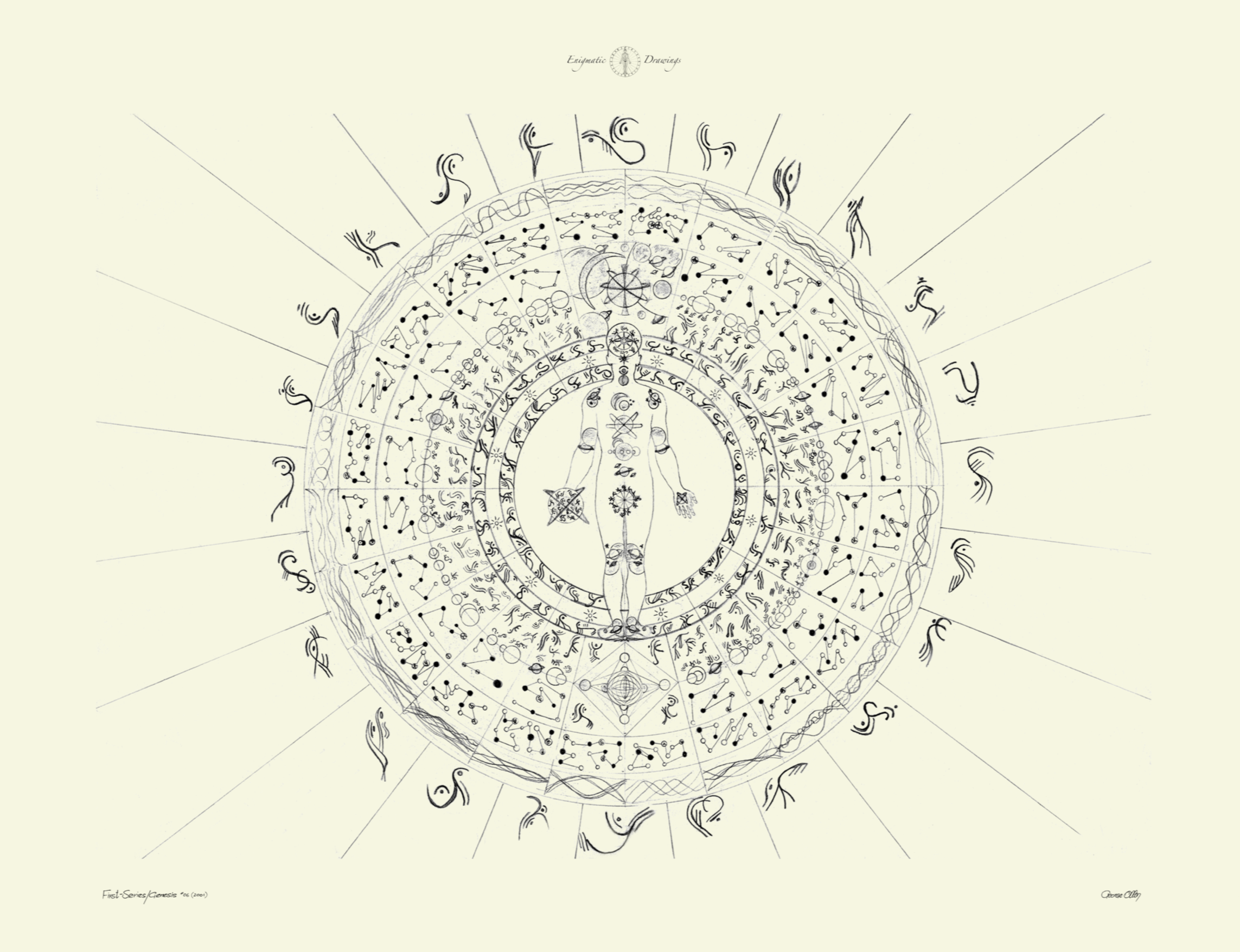
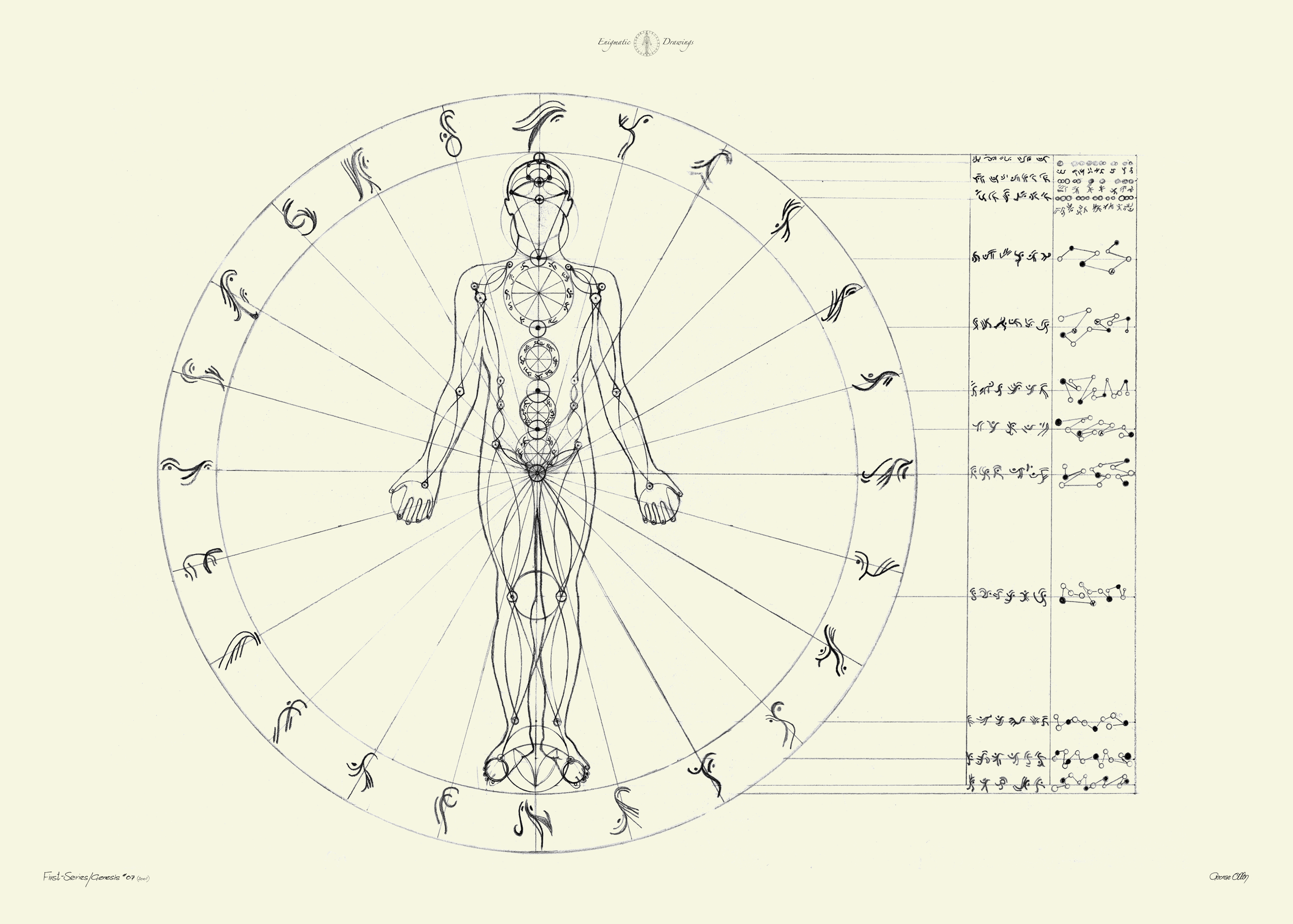
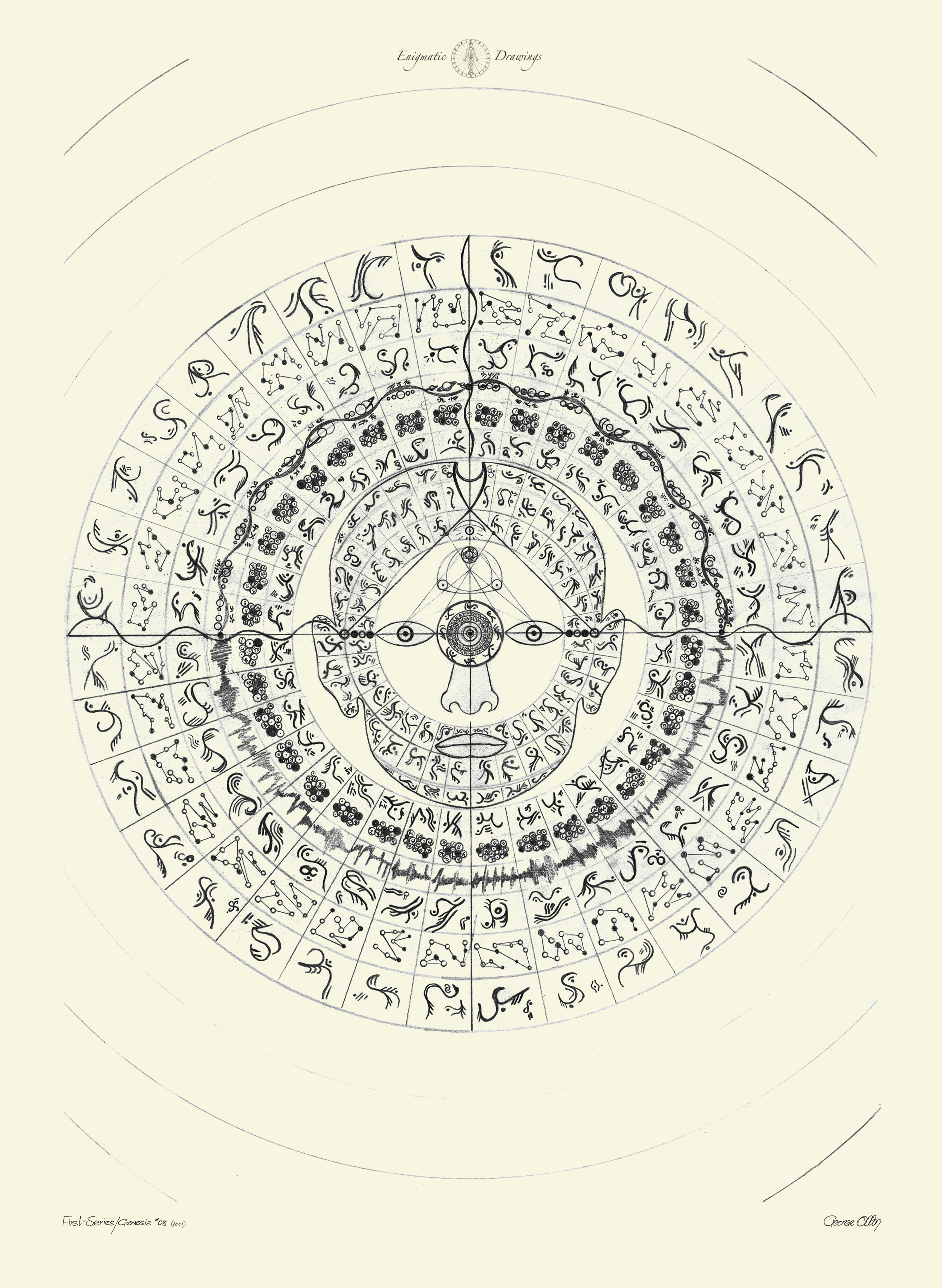
This page functions as both a visual index and a reading guide. The drawing grid below gives direct access to the archive. Each image opens to a dedicated analysis page where the work can be approached as an individual composition and as part of the larger trilogy sequence.
The purpose is not to reduce the drawings to one meaning. It is to make them more navigable: to slow the image down, clarify its visible systems, and provide multiple entry points into a body of work that is visual, symbolic, geometric, architectural, cosmological, and consciousness-facing.
Basic Analysis
A concise structural reading of the drawing: main forms, organising principles, visible systems, and its role within the wider series.
Expanded Analysis
A deeper interpretation of geometry, symbolic logic, cosmological references, perceptual effects, and the drawing’s place within Genesis, Matrix, or Origins.
Plain-English Overview
A direct explanation of what the drawing is doing, why it matters, and how to enter it without needing specialist language.
Archive structure
Originals, variants, derivatives, and the trilogy sequence.
The Enigmatic Drawings are organised around three major series: Genesis, Matrix, and Origins. The archive also includes colour variants, sectional extracts, and derivative formats drawn directly from the original visual structures.
These variants are not separate unrelated works. They are alternate pathways into the same underlying architecture, often revealing structural relationships, script fields, tonal systems, hidden symmetry, and modular coherence that may be harder to perceive in the complete original image.
Expanded Trilogy Overview
Taken together, the Enigmatic Drawings form a long-term trilogy developed across more than thirteen years: Genesis (2001–2005), Matrix (2007–2012), and Origins (2014).
At the broadest level, the trilogy moves through a coherent arc.
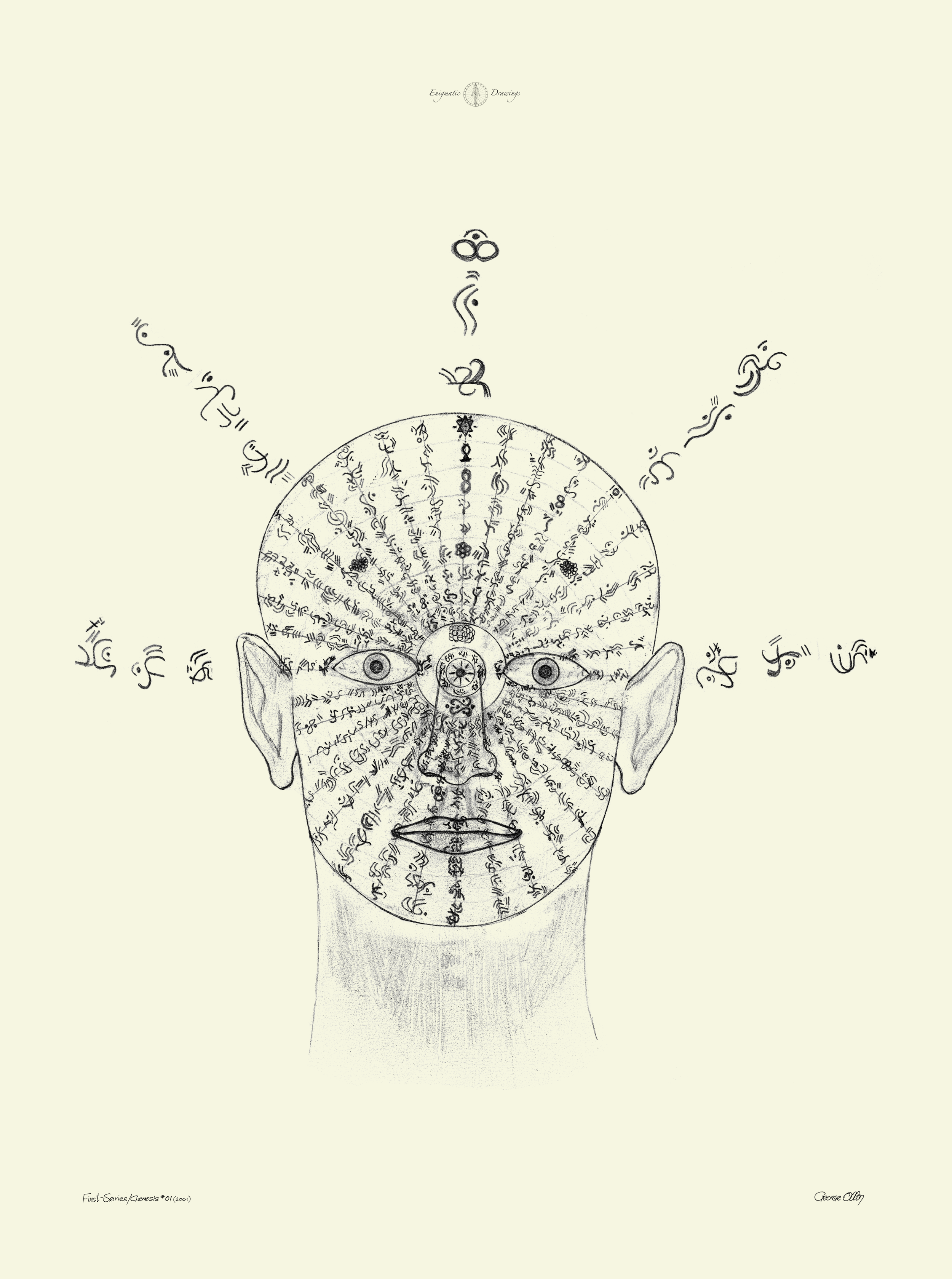
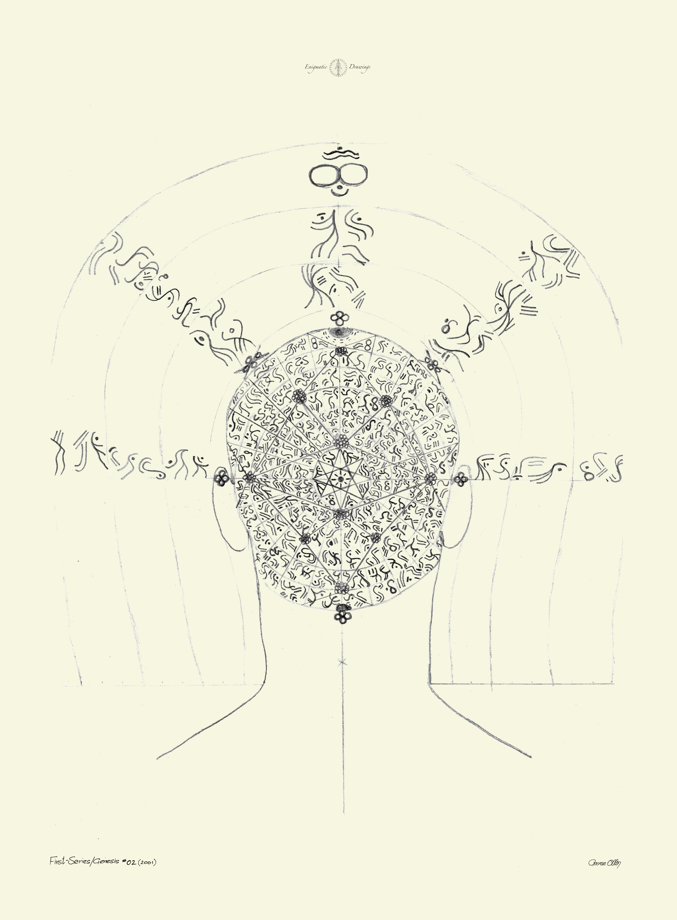
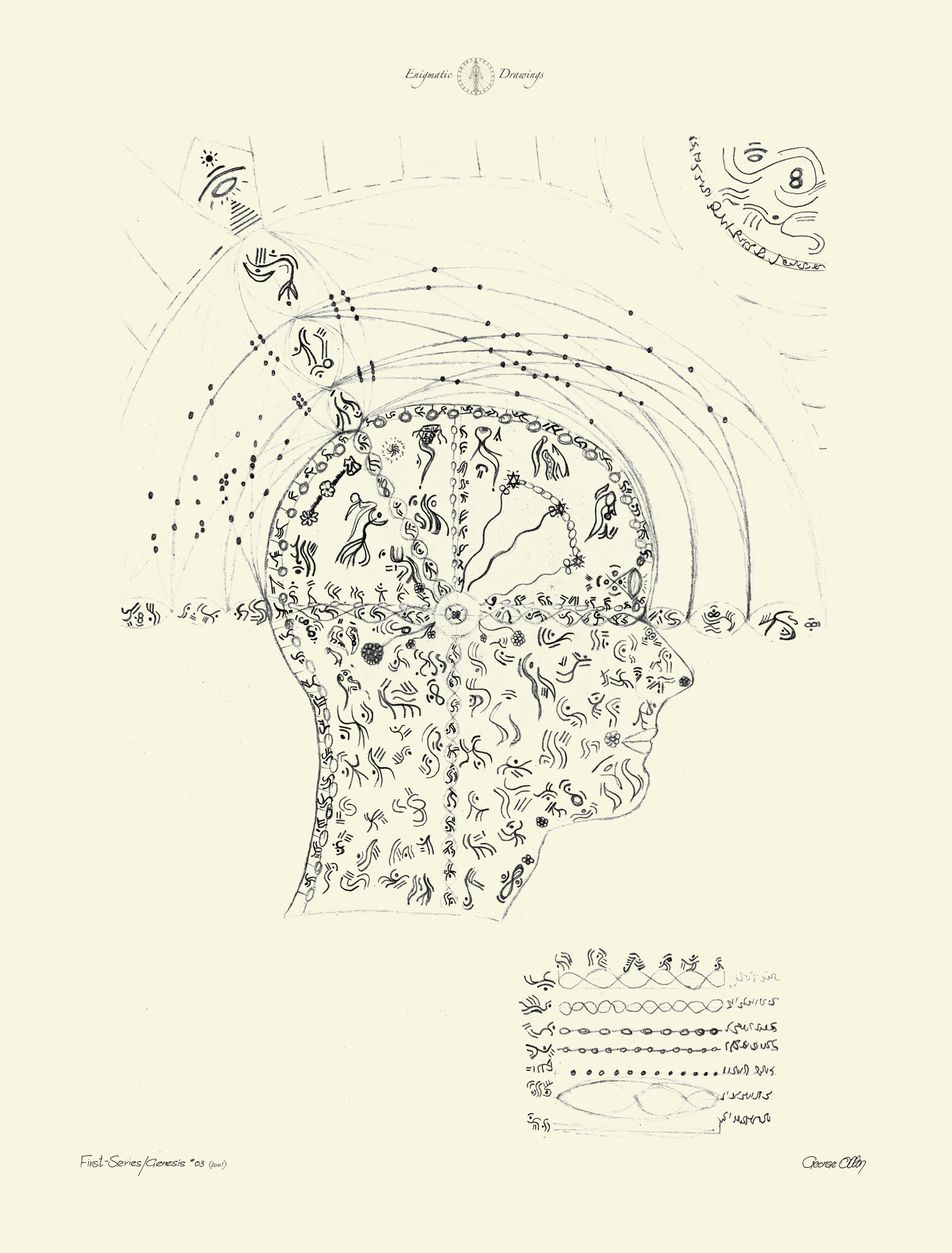
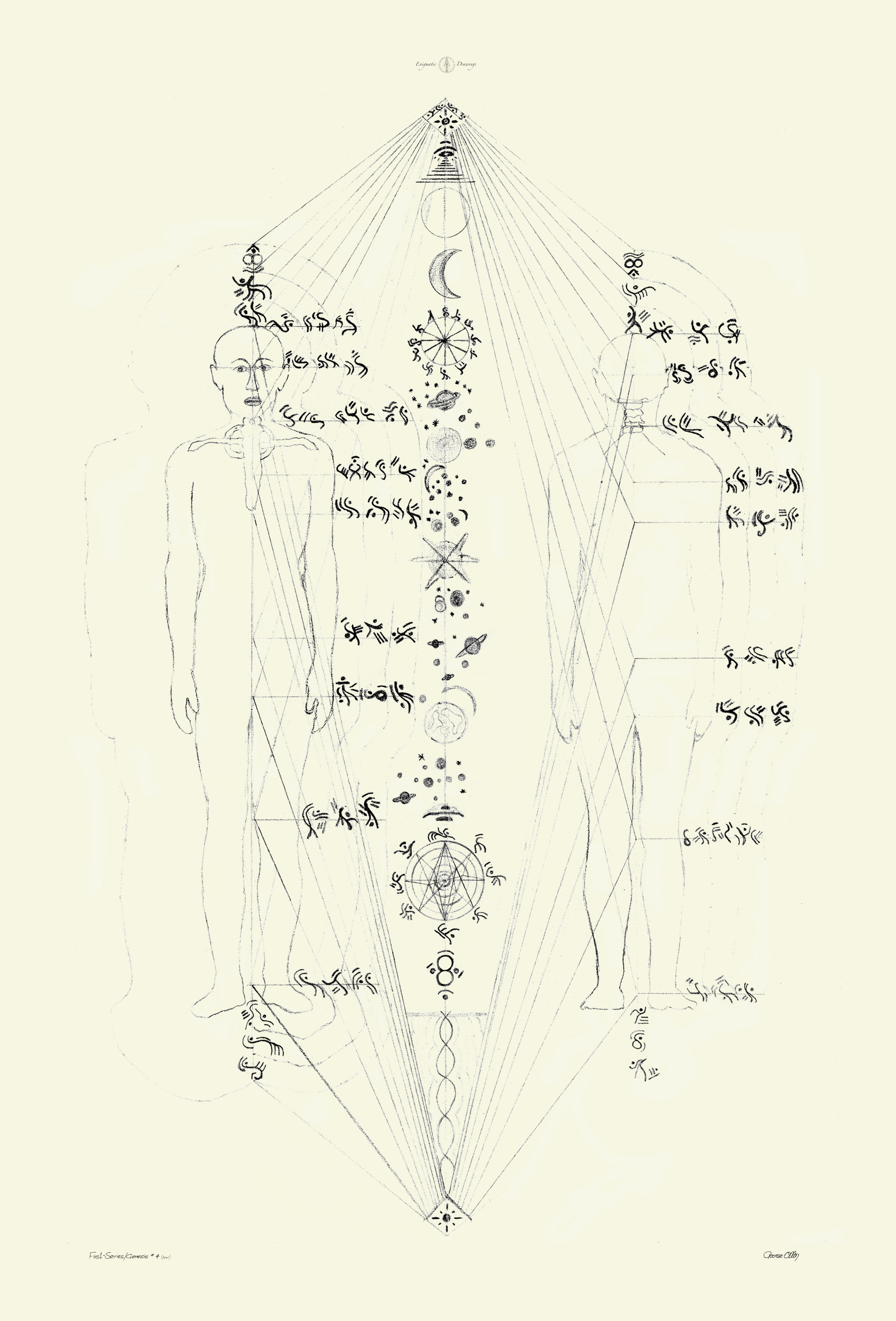
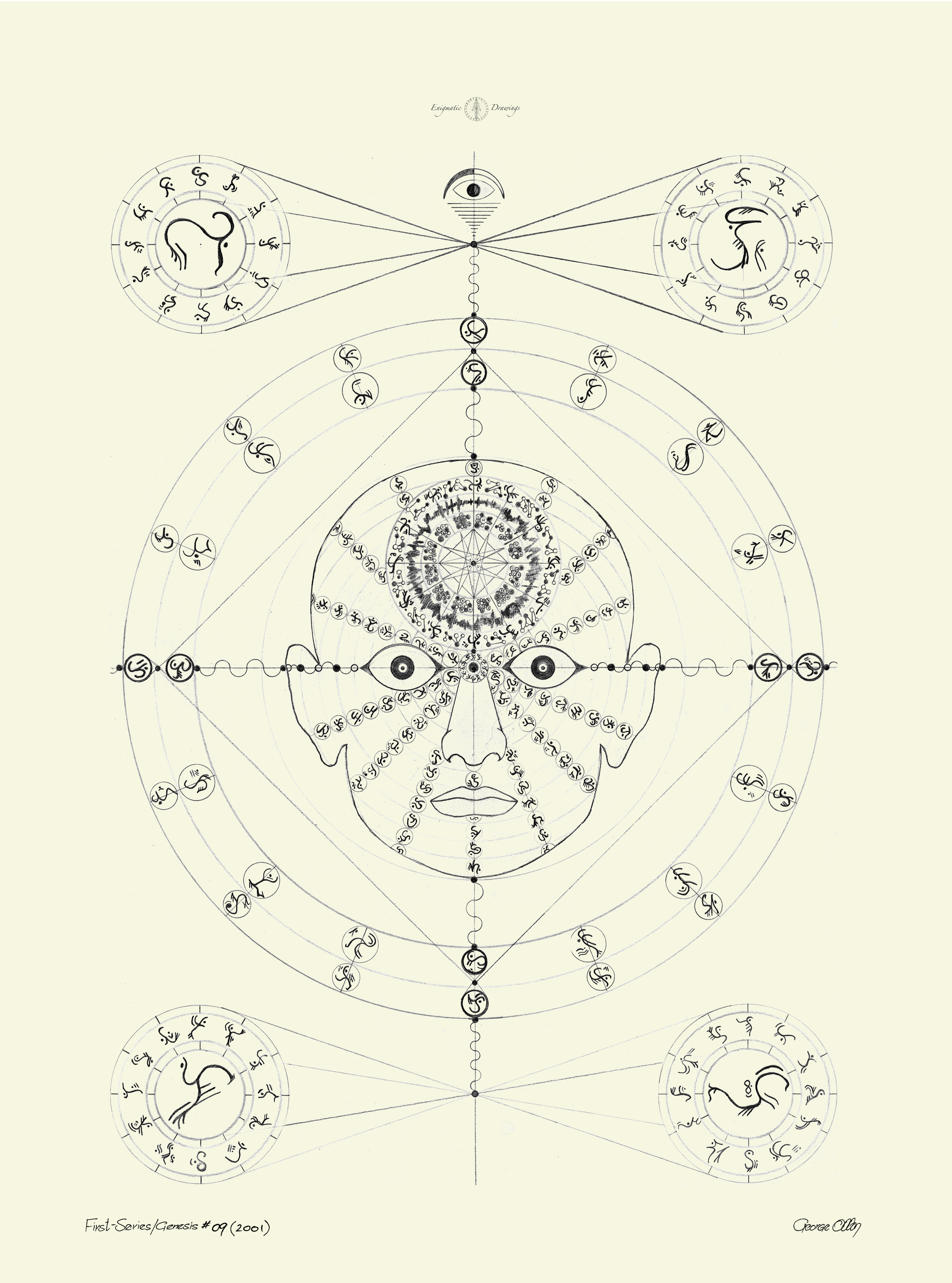
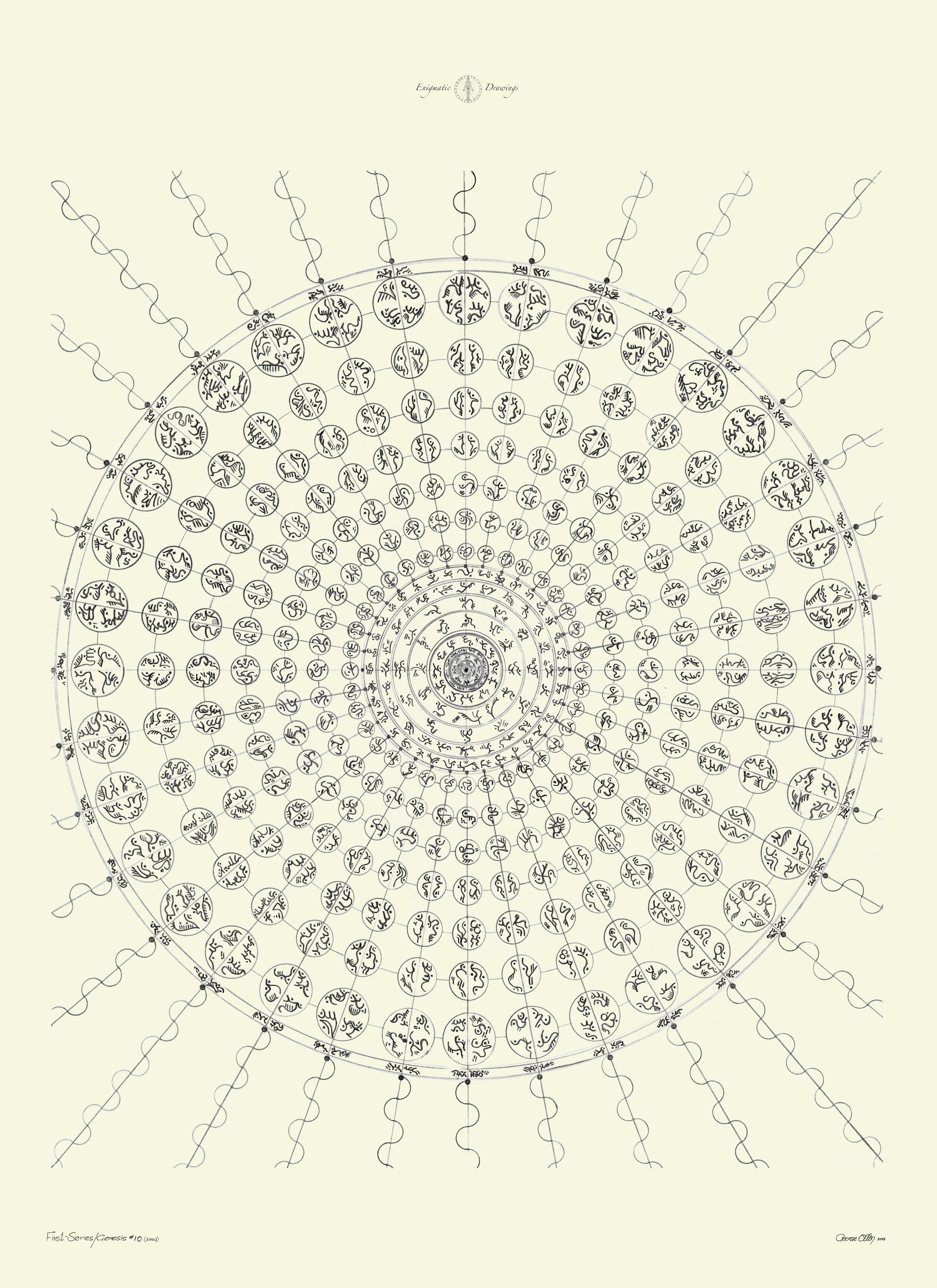
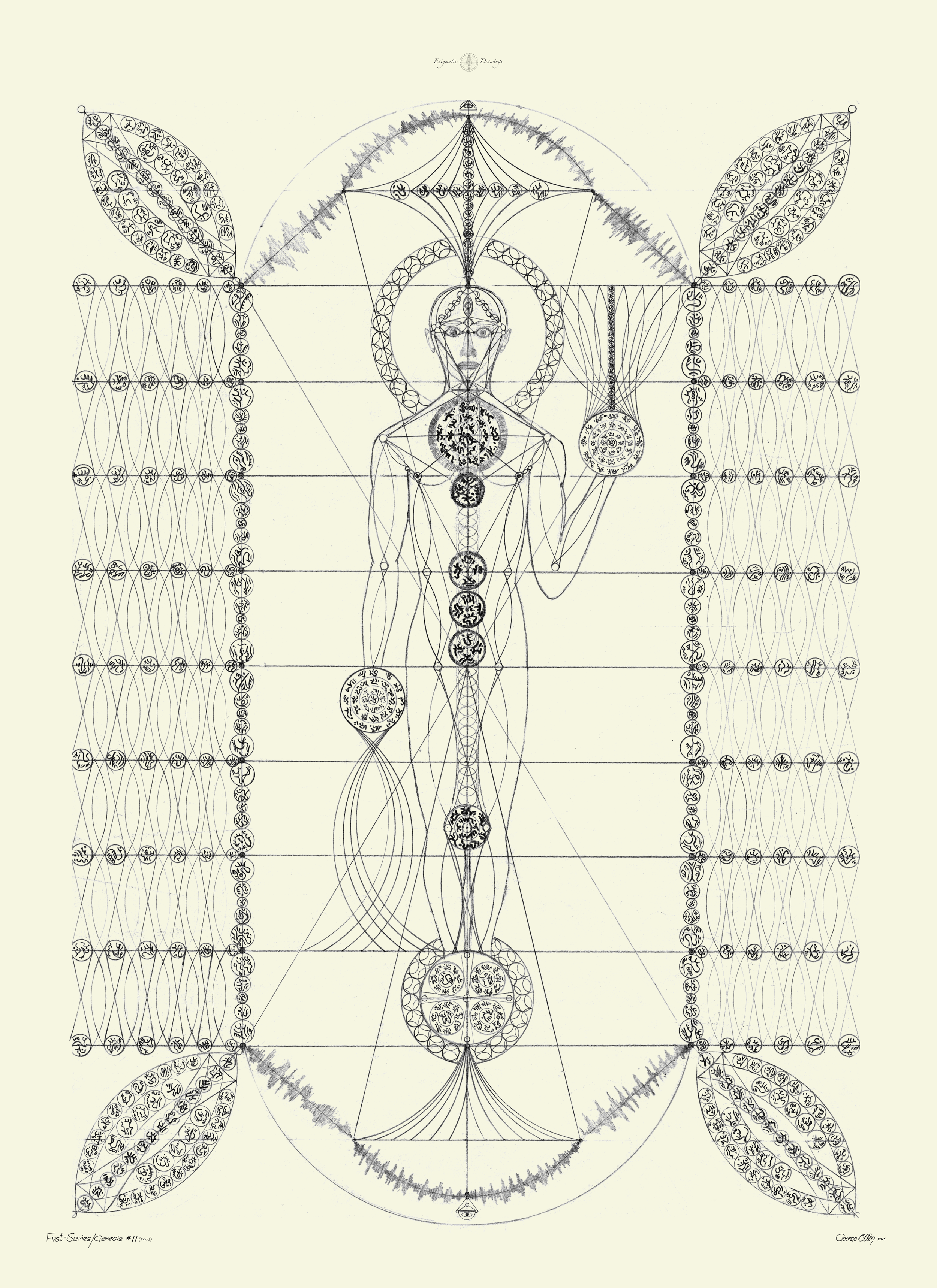
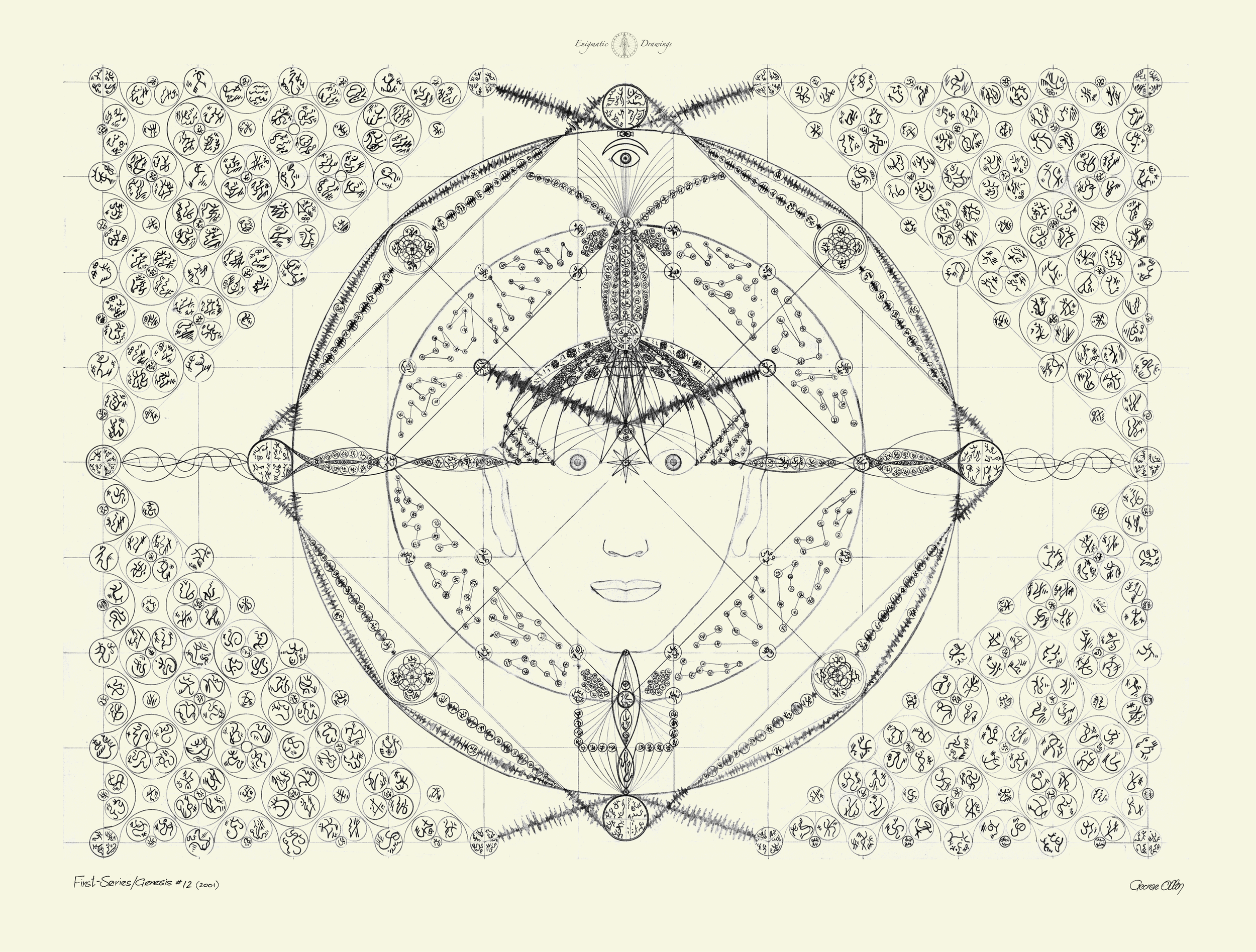
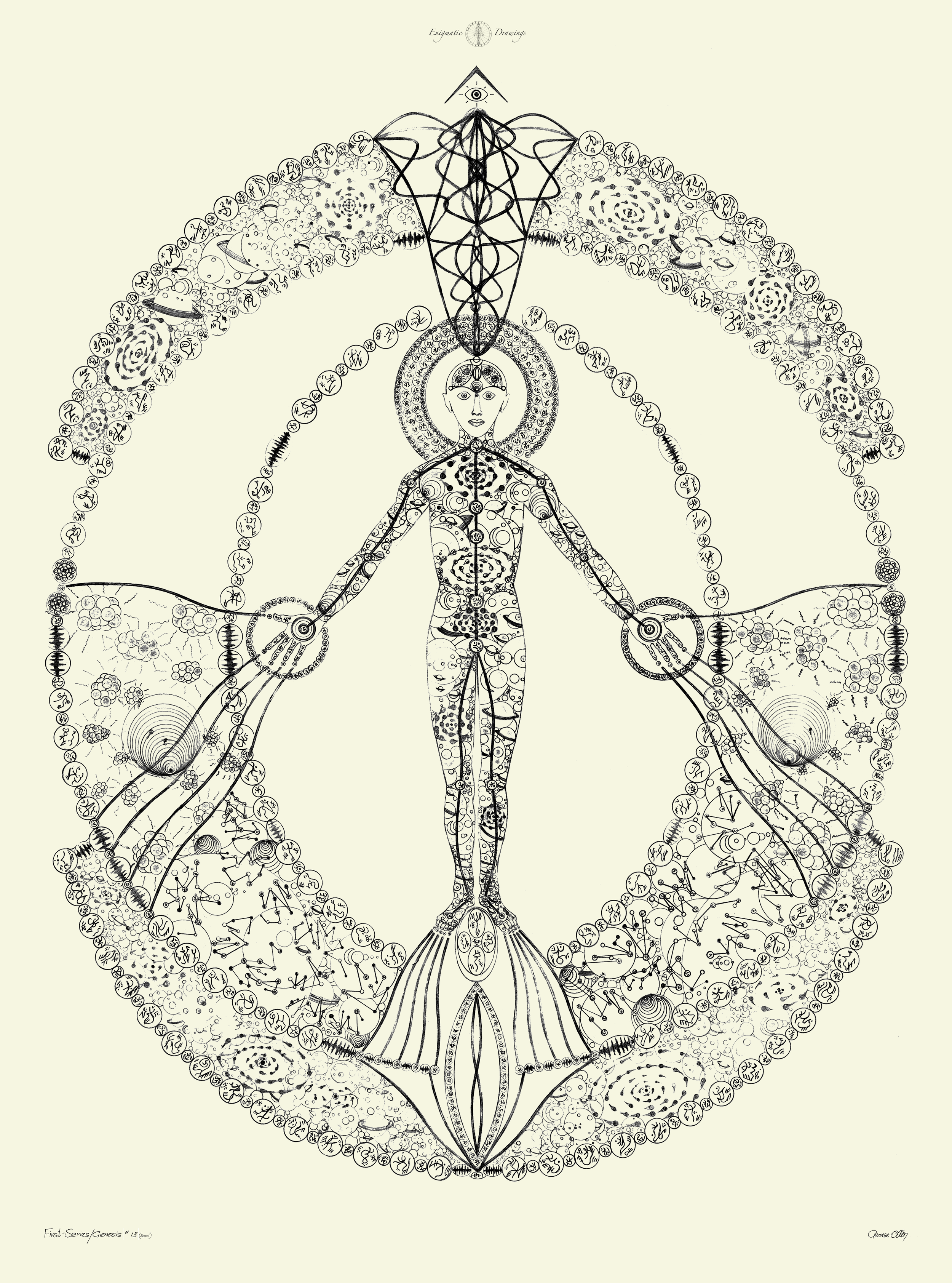
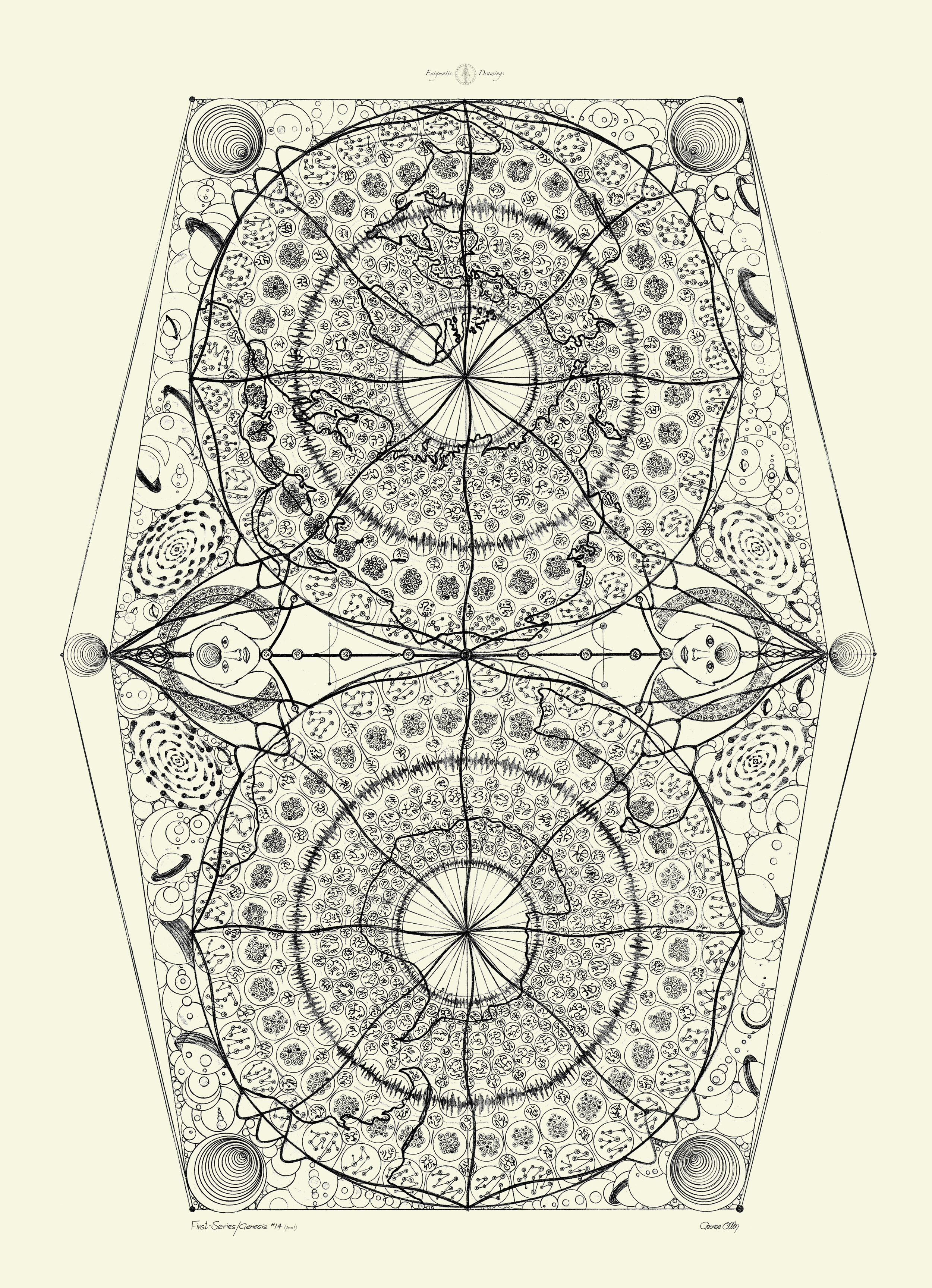
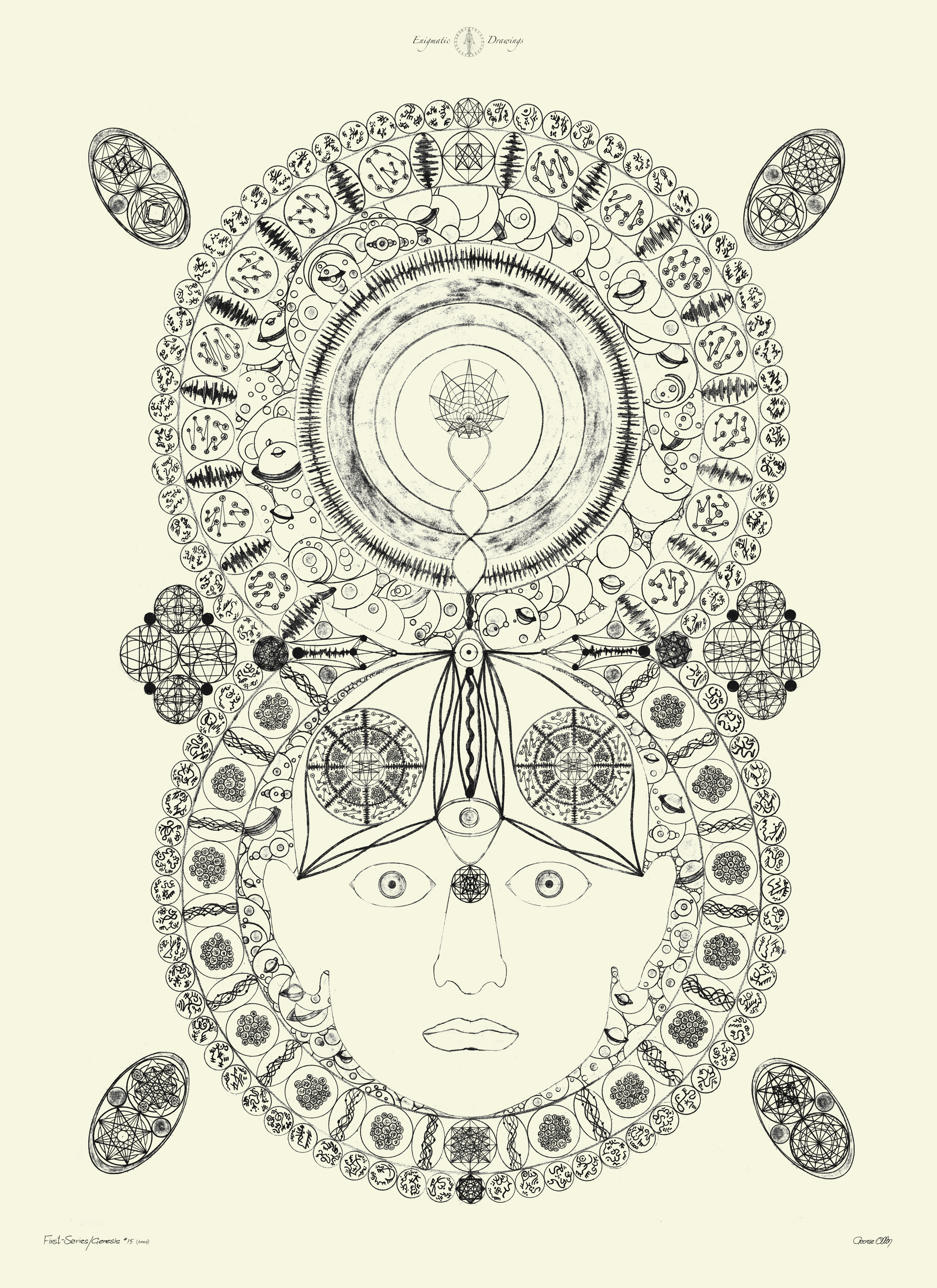
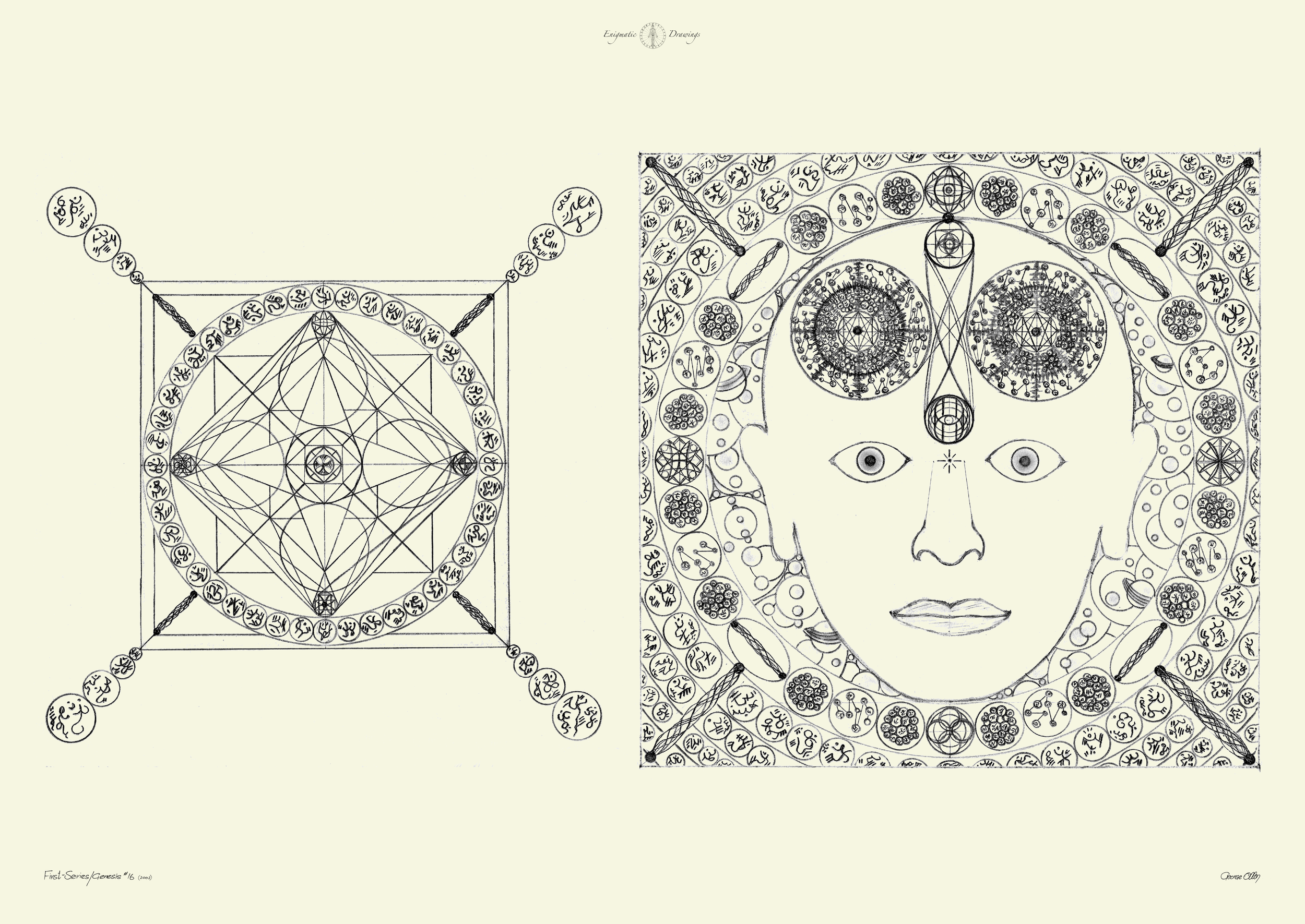
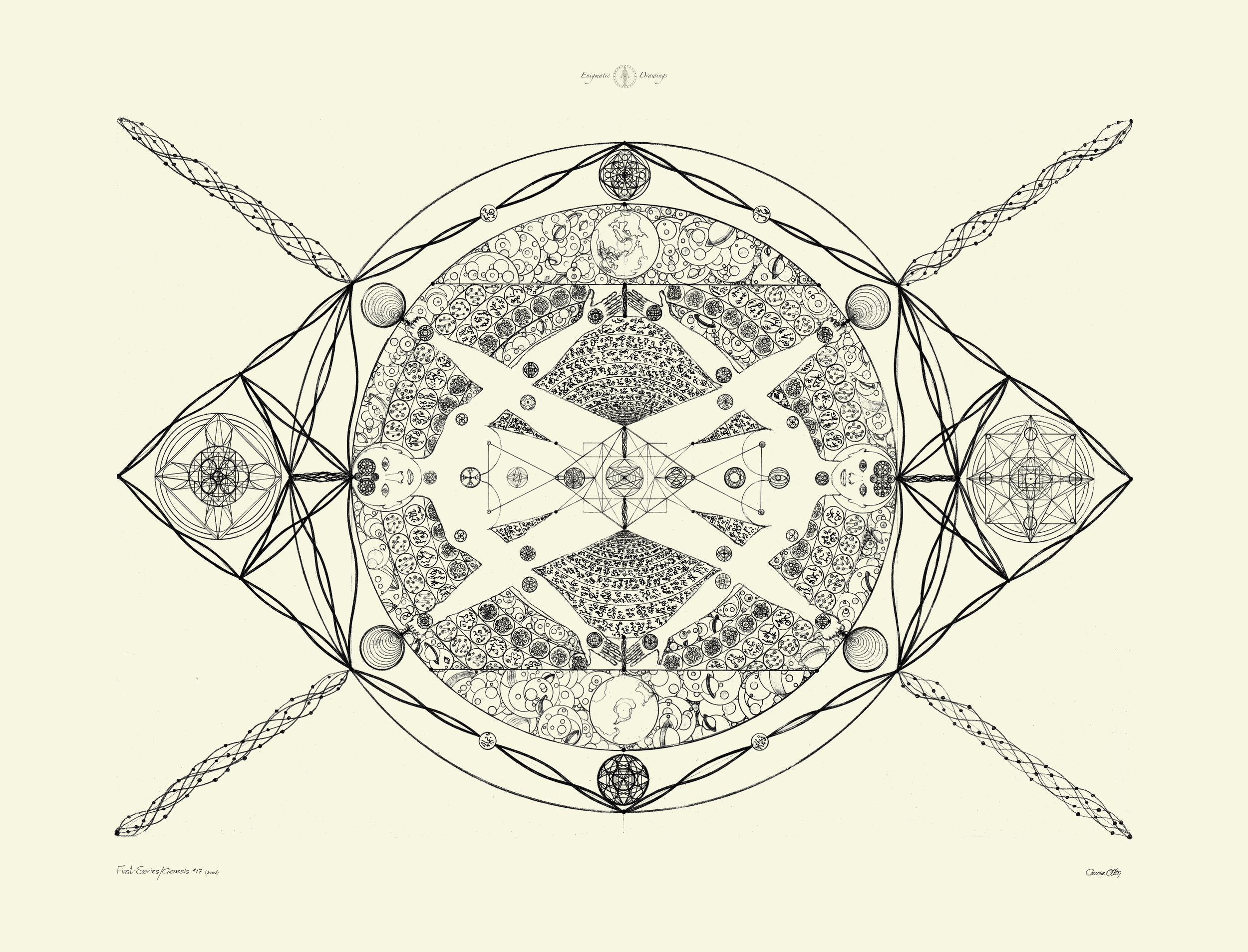
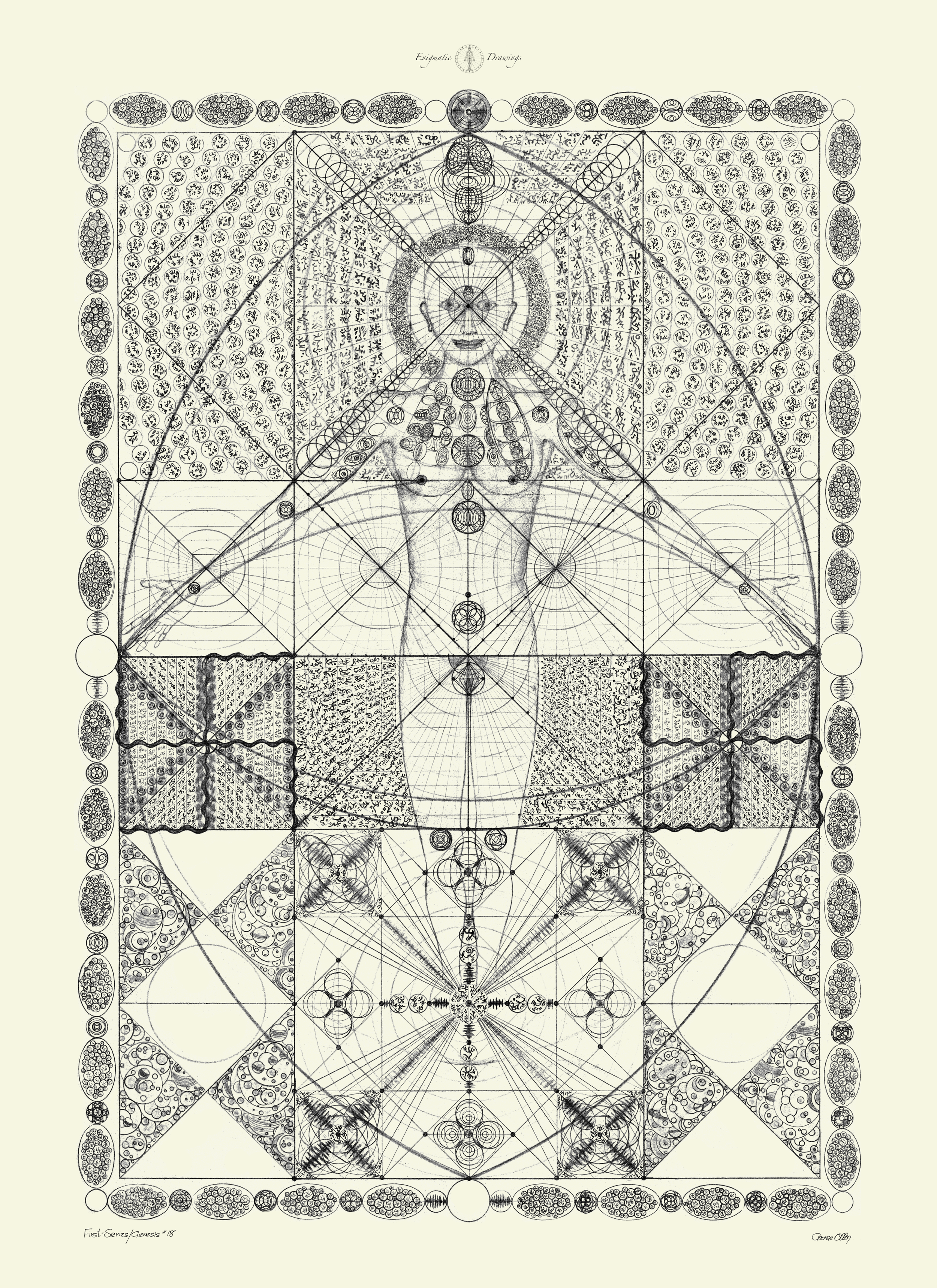
Genesis is the exploratory first movement. It establishes the visual language of the project through faces, heads, bodies, mandalas, symbolic architectures, planetary structures, and increasingly complex cosmological systems. Across the series, consciousness is shown awakening, structuring itself, entering embodiment, expanding into larger fields, and eventually resolving into large-scale integrative diagrams.
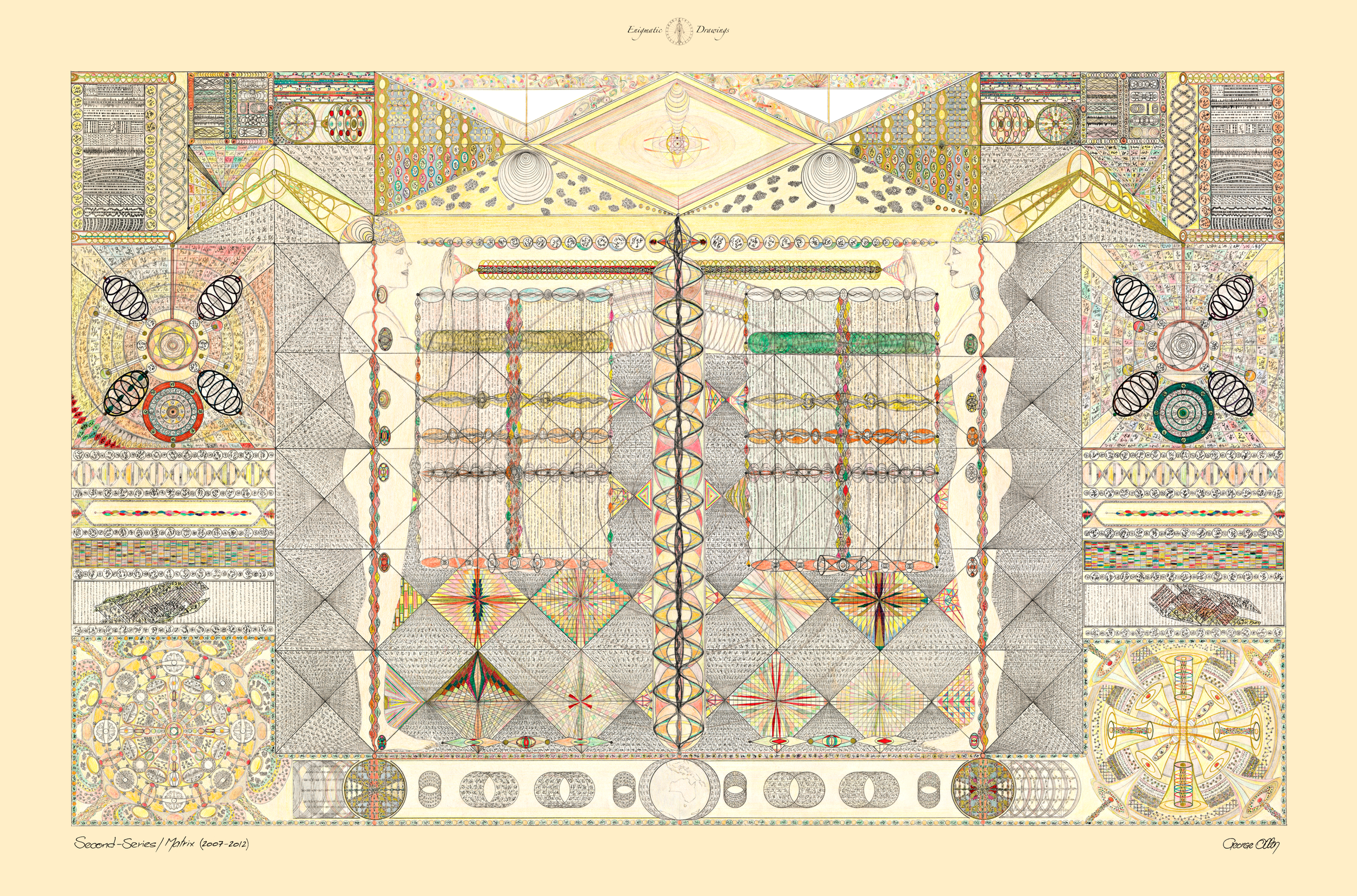
Matrix is the architectural second movement. It shifts from symbolic emergence into embodiment, polarity, coding, and systems logic. Human male and female figures, the central helical column, the source field above, the planetary ground below, and the surrounding chambers of script, geometry, and frequency turn the work into a full built cosmology. If Genesis asks how consciousness appears, Matrix asks how reality is structured, inhabited, and encoded.
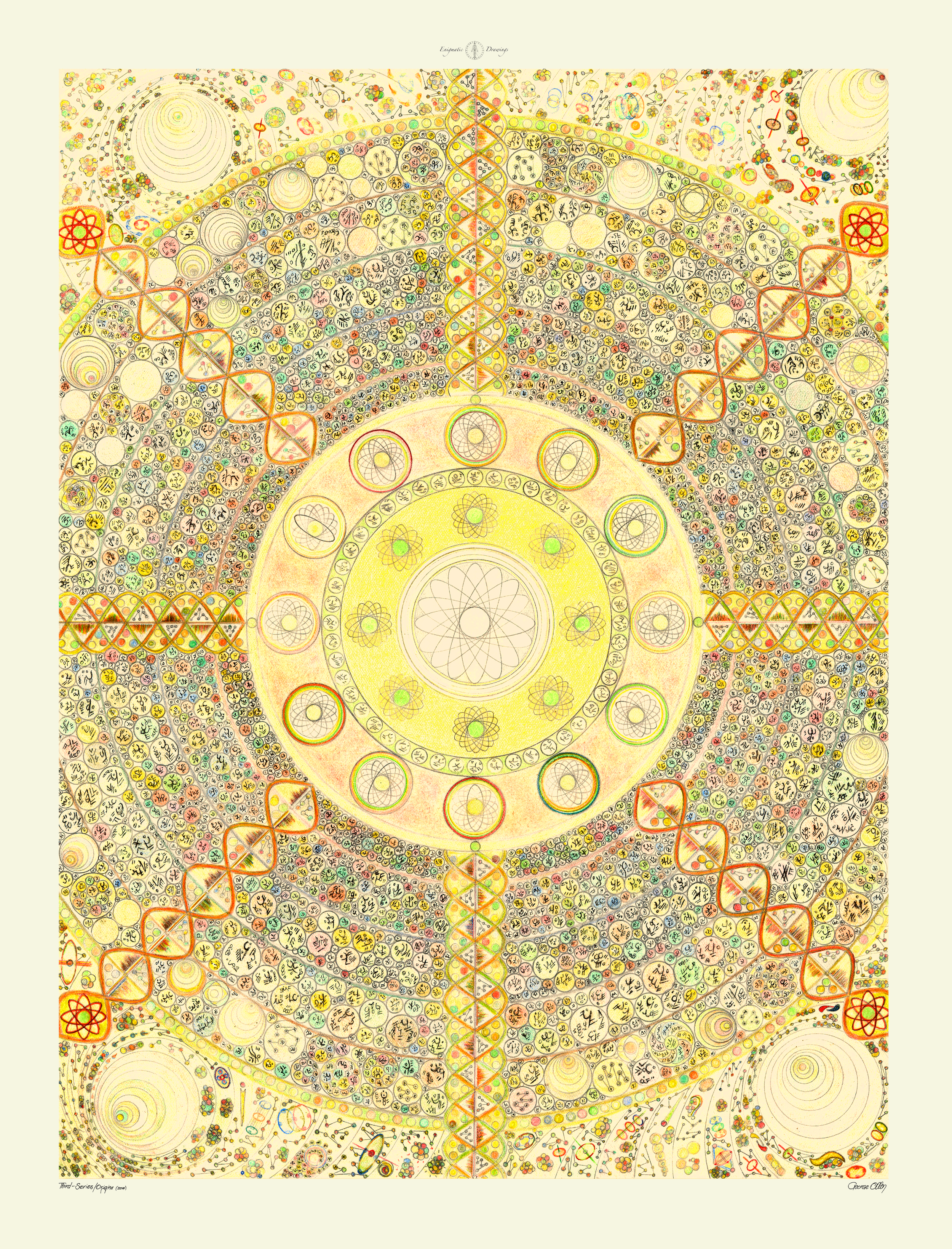
Origins is the trilogy’s third movement: the source-field stage. It removes the central human figure and reduces the heavy architectural emphasis, returning the trilogy to a more primary state of emergence. In its place is a radiant generative field composed of concentric creation structures, script-filled circles, helical propagations, vortical corner systems, and planetary or galactic forms. Origins does not simply continue the trilogy; it reframes it by turning back toward the luminous field from which both consciousness and structure appear to arise.
Across all three series, several principles remain constant. Circular forms recur at multiple scales. Strong vertical axes repeatedly organise the drawings. Bilateral balance often stabilises the image even when the field becomes complex. The unknown script remains one of the trilogy’s most distinctive features, shifting from concentrated inscription to distributed coded field. These continuities give the work unusual internal coherence despite the dramatic changes in style, scale, and emphasis.
For that reason, the trilogy can be read in two ways at once: as a sequence of individual drawings with their own internal logic, and as a larger unfolding investigation into consciousness, embodiment, symbolic order, planetary structure, and source.
Derivatives, Colour Variants, and Formats
In addition to the original drawings, many works in the Enigmatic Drawings project also exist in derivative forms. These include colour variants, sectional extracts, and other alternate presentations derived directly from the original structural blueprint.
A derivative is not a redesign. The underlying geometry, internal relationships, symbolic organisation, and proportional logic remain intact. What changes is the mode of presentation.
These alternate versions exist for an important reason.
The original drawings are often extremely dense. In many cases, major structural relationships can be difficult to isolate when the complete image is viewed as a single field. Derivatives make those relationships easier to perceive by drawing attention to particular systems within the whole.
Colour variants can reveal different structural families, repeated clusters, hidden symmetry, and shifts in visual hierarchy. Colour does not alter the architecture of the drawing, but it can change how the eye organises and experiences that architecture.
Sectional derivatives work in a similar way. By extracting a specific region from a larger composition and presenting it as a standalone work, they reveal the modular nature of the drawings. These sections are not merely fragments. In many cases they retain enough internal coherence to function as complete symbolic systems in their own right.
Taken together, the original works, colour variants, and sectional derivatives offer different ways of entering the same body of work:
- the original drawings present the complete system
- colour variants increase perceptual differentiation and emphasis
- sectional derivatives reveal modular structure and internal coherence
Each is therefore a valid entry point into the same underlying architecture.
AI-assisted analysis is currently provided for the original Genesis, Matrix, and Origins works. Colour variants, sectional derivatives, and alternate formats are presented as related visual treatments rather than as separate analysis pages.
Begin below
Select any image to enter its dedicated analysis page.
The image index below is the practical entry point into the archive. Choose an original drawing, then move through its visual structure, AI-assisted analysis, and plain-English interpretation.